
UV DTF Transfer is changing the way home crafters approach custom textiles and small-run designs. The approach blends quick curing with clean edges and a workflow that fits a busy home workshop. For makers seeking faster turnaround without sacrificing quality, this method integrates UV-curable inks with a direct-to-film pathway. It enables vibrant results on fabrics ranging from cotton to blends while maintaining a soft hand. If you’re exploring beginner-friendly gear and setup, the approach offers practical steps to maximize efficiency.
From a broader viewpoint, this technology sits in the UV printing family that uses film as a carrier and UV-curable ink on the surface. As you compare options, consider the overall workflow, curing speed, and fabric compatibility, rather than chasing a single brand label. Another way to describe the process is to view it as a streamlined DTF transfer process: print, cure, apply adhesive, and press. Think about how such a setup supports home-based garment customization, scalable from hobby projects to small runs. In practice, results hinge on ink performance, film quality, heat control, and thoughtful preparation to maintain color fidelity.
UV DTF Transfer: A Fast, Durable Solution for Home Makers
UV DTF Transfer represents a rapid, high-quality approach to printing on textiles for home makers. By using UV-curable inks printed onto a specialized DTF transfer film, the design is cured instantly under UV light, eliminating long drying times and speeding up the overall workflow. This instant cure means you can move quickly from print to press, reducing the bottlenecks that often slow down small-batch projects.
The result is sharp edges, solid color density, and durable wear that are competitive with professional setups, while remaining suitable for home studios. This approach aligns well with the needs of home makers who want to produce vibrant designs on cotton, blends, and other fabrics with a soft hand. With a well-chosen UV DTF printer and compatible transfer films, you can build a practical, efficient workflow that delivers repeatable, professional results.
Maximizing Color Vibrancy with UV DTF: Tips for Dark and Light Fabrics
Color vibrancy is a central benefit of UV DTF transfers. On light fabrics, you can enjoy bold, crisp imagery with minimal color loss, while dark fabrics often require a white underbase or strategic layering to ensure opacity and vibrancy. The UV-curable inks offer high density and smooth gradients, which helps achieve sharp, publication-ready results even on challenging substrates.
To consistently reproduce vivid designs, calibrate your printer profiles, select appropriate transfer films, and choose fabrics that respond well to UV inks. Factors such as fabric type, ink chemistry, and curing conditions all influence color fidelity, so testing swatches and documenting successful settings is essential—especially when exploring color vibrancy with UV DTF in a home setup.
Choosing the Right UV DTF Printer and Materials for Your Workshop
Selecting a UV DTF printer is foundational to a reliable home workflow. Look for a model with sufficient resolution for detailed artwork, robust print speeds to meet production goals, and compatibility with your chosen transfer film. Key considerations include print head quality, ink chemistry, curing speed, and ease of maintenance, all of which influence the overall efficiency of the DTF transfer process.
Beyond the printer, downstream materials matter just as much: a reliable DTF transfer film designed for your workflow, an adhesive system (powder or liquid-based), and a heat press capable of stable temperature and pressure. For home makers, balancing upfront costs with ongoing material expenses is part of the ROI, and ensuring compatibility among film, adhesive, and fabric helps streamline the DTF transfer process.
Step-by-Step Workflow: From Design to Transfer at Home
A practical UV DTF workflow for home crafters starts with design preparation. Create or import artwork in vector or high-resolution raster formats, ensuring proper sizing for the target garment and accounting for bleed and margins. This sets the stage for a clean print and accurate transfer in the home setting.
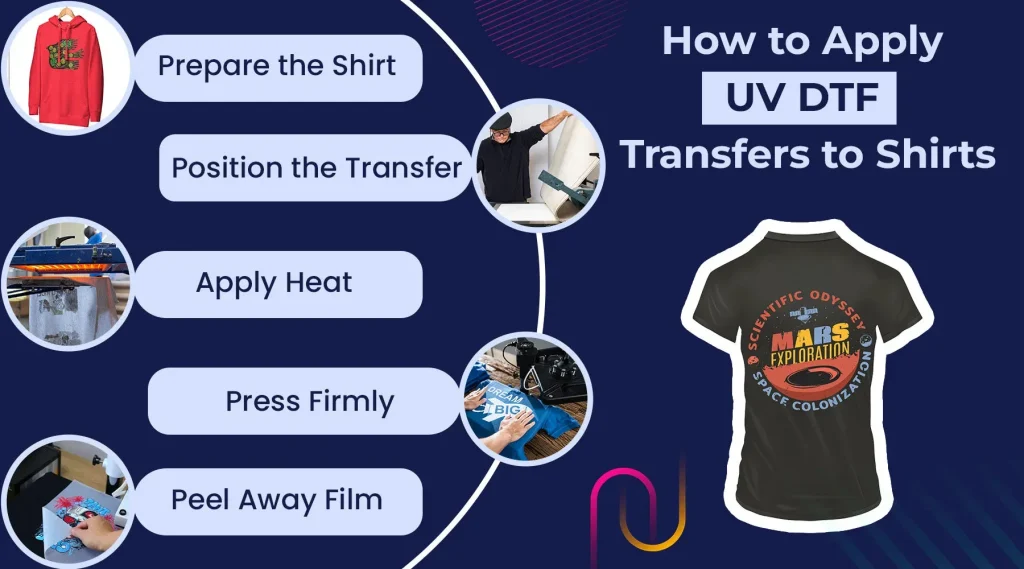
Next, print with the UV DTF printer onto the transfer film, then cure the ink promptly using an appropriate UV light source. After curing, apply the adhesive layer and prep the garment with a pre-press to remove moisture. The transfer itself is performed with a heat press, followed by a controlled cooldown and reveal to finalize the design. Keeping a log of temperatures, time, and pressure for different fabrics helps reproduce successful results over time within the DTF transfer process.
Fabric Prep, Adhesives, and Safe Handling for Consistent Results
Preparing fabrics properly is essential for consistent UV DTF Transfer results. Fabric choice affects under-base needs and color performance, with cotton and natural blends typically behaving differently from synthetic blends. Testing a few swatches prior to a full run is a smart practice to avoid surprises when performing DTF transfer at home.
Carefully select the adhesive system—powder or liquid—based on your transfer film and fabric type, and ensure you have a clean, dust-free workspace to avoid adhesion issues. Temperature, pressure, and dwell time must be tuned for each fabric, and safety practices, including ventilation and eye protection when working with UV-curable inks, are crucial to maintain a safe, productive home setup.
Troubleshooting Common UV DTF Transfer Issues
Even with a well-planned workflow, you may encounter challenges like color drift, ghosting, or misregistration. Regularly calibrate color profiles and verify that films and inks are fresh, storing materials away from direct heat and light. Proper garment anchoring and registration marks can mitigate alignment problems during transfer, especially when using a home heat press.
Other common issues include edges that lift or crack, and white underbase problems on dark fabrics. Ensure an even adhesive application and allow adequate cooling before handling. If colors appear dull or inconsistent, revisit ink curing, film compatibility, and fabric type considerations to protect color vibrancy with UV DTF and improve overall transfer reliability.
Frequently Asked Questions
What is UV DTF Transfer and how do UV DTF printers enable it?
UV DTF Transfer uses UV-curable inks printed onto a DTF transfer film and cured instantly with UV light. The design is then transferred to fabric with a heat press, resulting in sharp edges, high color density, and durable wear. UV DTF printers are central to this workflow, delivering precise detail and faster turnaround compared with traditional inkjet or plastisol transfers.
How can I set up DTF transfer at home for small batches using UV DTF Transfer?
Start with a UV DTF printer, a compatible transfer film, and a heat press. Steps: design the artwork, print onto the transfer film with UV-curable ink, cure promptly with UV light, apply the adhesive, pre-press the garment, transfer with heat and pressure, then peel away the carrier film. Keep a log of temperature, time and pressure per fabric to reproduce results.
How can I maximize color vibrancy with UV DTF Transfer on dark fabrics?
Maximize vibrancy by using a white underbase on dark fabrics when required, calibrating color profiles, and selecting a high quality transfer film. Ensure the UV inks cure fully and apply consistent heat and pressure to preserve color fidelity. Proper setup yields sharper details and strong opacity for color vibrancy with UV DTF.
What factors affect the DTF transfer process quality when using UV DTF Transfer?
Key factors include printer resolution and ink curing speed, the quality of the transfer film and adhesive, fabric type, and heat press settings (temperature, dwell time, and pressure). Misalignment or lifting can happen if one element is off, so regular calibration and fabric tests help maintain consistent results.
What heat transfer settings work best for home makers using UV DTF Transfer?
A practical starting point is medium to high temperature with moderate pressure, plus an appropriate dwell time. Pre-press the fabric to remove moisture, then perform a controlled transfer and allow a post-press cooldown. Always test on similar fabrics before larger runs to optimize heat transfer for home makers.
How do I choose the right UV DTF printer and materials for at home DTF transfer?
Look for a printer with sufficient resolution and print speed that matches your production goals, and ensure compatibility with your chosen transfer film and adhesive system. Consider upfront cost versus ongoing material expenses, plus maintenance needs for the heat press and curing system. Choose reliable transfer films and a compatible adhesive to support consistent DTF transfer at home.
| Aspect | Key Points |
|---|---|
| What is UV DTF Transfer | UV-curable inks printed on a DTF transfer film, cured instantly by UV light to speed up the workflow. |
| Speed and Efficiency | Instant cure reduces dry time, minimizes handling and bottlenecks; faster lead times for small batches. |
| Quality & Color Vibrancy | Sharper edges, higher color density, and better opacity on dark fabrics; color reproduction improves vs traditional methods; dark fabrics may require a white underbase. |
| Materials & Equipment | Printer with adequate resolution and speed; compatible transfer film; adhesive system (powder or liquid); reliable heat press. |
| Process Overview | Design to transfer workflow includes design, print, cure, apply adhesive, prep garment, transfer, reveal; log settings for reproducibility. |
| Fabric Preparation | Fabric choice matters (light vs dark); test swatches; ensure fabric compatibility with films and inks; pre-press to remove moisture and wrinkles. |
| Safety & Maintenance | Ventilation and eye protection for UV inks; regular maintenance of curing light, print heads, and heat press; calibration checks. |
| Common Challenges | Color drift, ghosting/misregistration, lifting edges, white underbase issues; troubleshoot with calibration, proper adhesion, and testing. |
| Practical Tips | Start small, maintain a clean workspace, establish a testing protocol, and track fabric, ink, and film results to repeat successes. |
| Road Ahead | Improvements in UV inks, release films, and compact printers expand home-maker capabilities; ongoing optimization and education support better outcomes. |
Summary
UV DTF Transfer offers home crafters a compelling path to fast, vibrant, and durable textile designs. By combining UV-curable inks with a streamlined DTF workflow, makers can shorten lead times, improve color reproduction, and expand product options across cotton, blends, and other fabrics. A successful home workflow depends on selecting a capable UV DTF printer, compatible transfer films, and a reliable heat press, plus following a careful design-to-transfer process and maintaining consistent test records. With practice, UV DTF Transfer enables professional-looking results for custom apparel, gifts, or small-batch merchandise right from a home workshop, helping you manage costs and timelines while unlocking creativity.